
From Bronx block parties to global rebellion, hip-hop has spent more than five decades turning struggle into art. This November, we’re celebrating the pioneers, the four elements and the people keeping the culture alive.
By Roxy Riot | Coachella Scene
The Revolution Wasn’t Televised. It Was Amplified.
Before hip-hop became a global industry, before platinum records, streaming algorithms and rappers with endorsement deals, there were two turntables, a microphone and a generation of young people determined to make themselves heard.
No expensive recording studios. No corporate sponsors. No permission slips.
Just creativity, community and the irresistible power of a breakbeat.
In the South Bronx of the 1970s, Black and Latino youth were building something extraordinary amid economic hardship, neighborhood disinvestment and a city struggling with its own future.
They didn’t wait for someone to give them a platform.
They built one.
And more than fifty years later, that cultural revolution is still making noise.
November is Hip-Hop History Month, an opportunity to celebrate something much bigger than a musical genre. It’s a recognition of the DJs, MCs, graffiti writers, dancers, producers and cultural pioneers who transformed neighborhood expression into a worldwide movement.
Because hip-hop was never just about the records.
It was about the people.
It Started With a Breakbeat
August 11, 1973, has become one of the most celebrated dates in hip-hop history.
That evening, DJ Kool Herc and his sister Cindy Campbell helped bring a neighborhood party to life at 1520 Sedgwick Avenue in the Bronx.
Herc, born Clive Campbell in Jamaica, brought influences from Caribbean sound-system culture into New York’s burgeoning party scene. His innovative approach to extending the instrumental breaks of funk and soul records helped create the rhythmic foundation for a new form of dance and musical expression.
Those breaks were where the dancers went wild.
The people who moved to them became known as b-boys and b-girls. DJs developed new techniques. MCs evolved from party motivators into increasingly sophisticated lyricists.
Hip-hop didn’t emerge fully formed in one night. It developed through countless gatherings, neighborhood rivalries, creative experiments and contributions from artists whose names never appeared on a record sleeve.
But something unmistakable was happening.
The turntable was becoming an instrument. The microphone was becoming a weapon of expression. And the streets were becoming an art school without walls.
Four Elements. Infinite Possibilities.
Hip-hop’s foundational elements are commonly identified as DJing, MCing, breaking and graffiti writing.
Each offered a different way to participate in the culture.
DJing transformed existing recordings into new musical experiences. Pioneers including Grandmaster Flash, Afrika Bambaataa and Kool Herc helped establish techniques and traditions that would influence generations of producers and turntablists.
MCing evolved from rhythmic crowd interaction into storytelling, social commentary, verbal competition and poetry. The microphone became a place where identity, humor, anger and imagination could coexist.
Breaking turned the human body into a rhythmic instrument. Dancers developed athletic, expressive movements that transformed sidewalks, community centers and dance floors into arenas of creativity.
Graffiti writing gave visual identity to a generation demanding recognition. Names, colors and elaborate lettering spread across New York’s urban landscape, creating a visual language that would influence art, fashion and design around the world.
The relationship between graffiti and hip-hop is historically complex; both developed through overlapping urban youth cultures rather than one simply creating the other.
Together, these expressions became central to hip-hop’s identity.
And the culture kept growing.
Beatboxing, street fashion, production, entrepreneurship, language and cultural knowledge became important parts of its expanding vocabulary.
Hip-hop was something you could hear, see, wear, dance, paint, study and live.
The Teacha Is Still Teaching
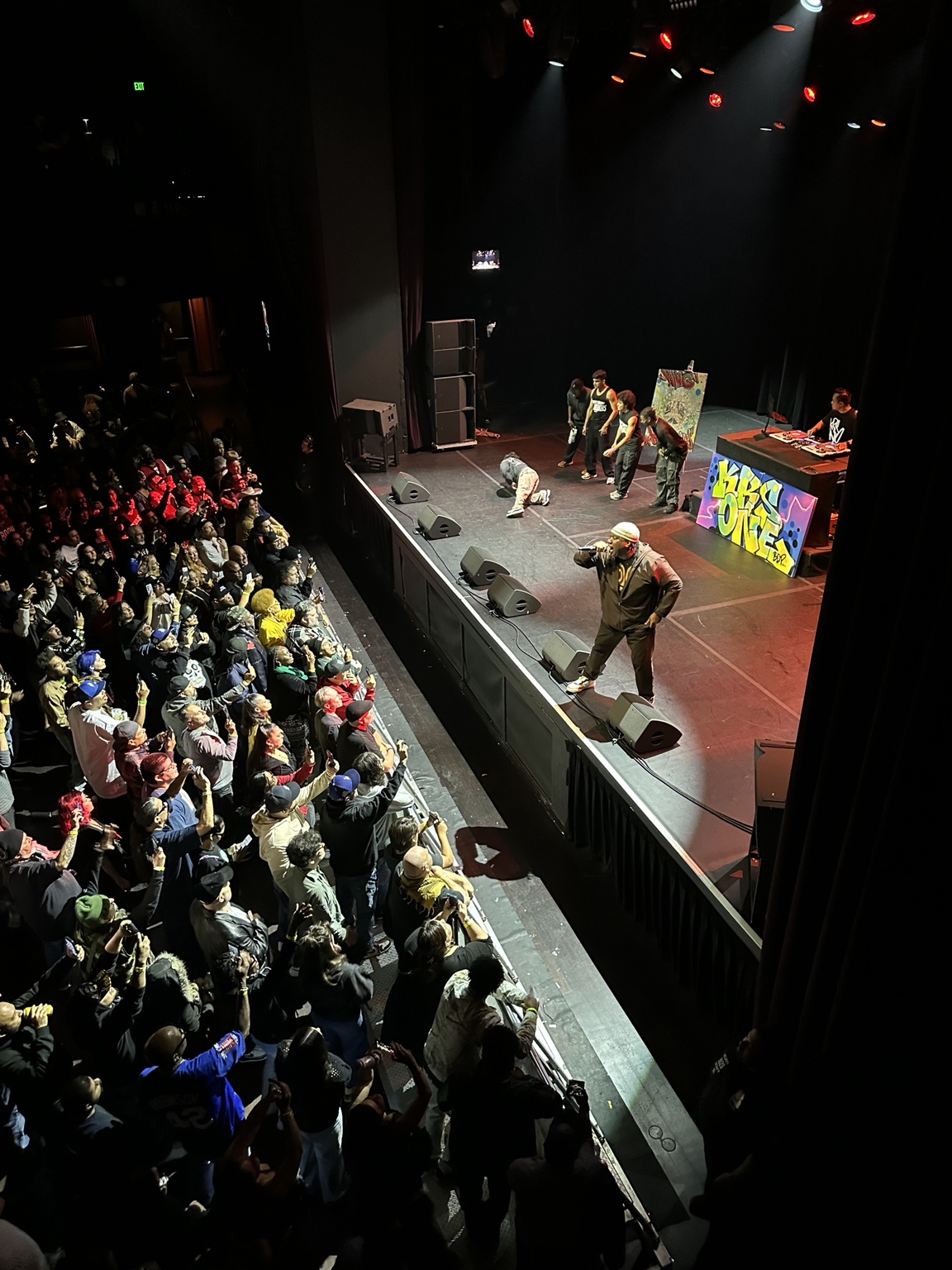
On November 1, 2026, Hip-Hop History Month kicked off with a living lesson in the culture’s foundations at The Novo in downtown Los Angeles.
And the professor was none other than KRS-One.
The legendary Bronx MC, philosopher and self-proclaimed Teacha didn’t just arrive with a microphone and a catalog of classics.
He brought the culture with him.
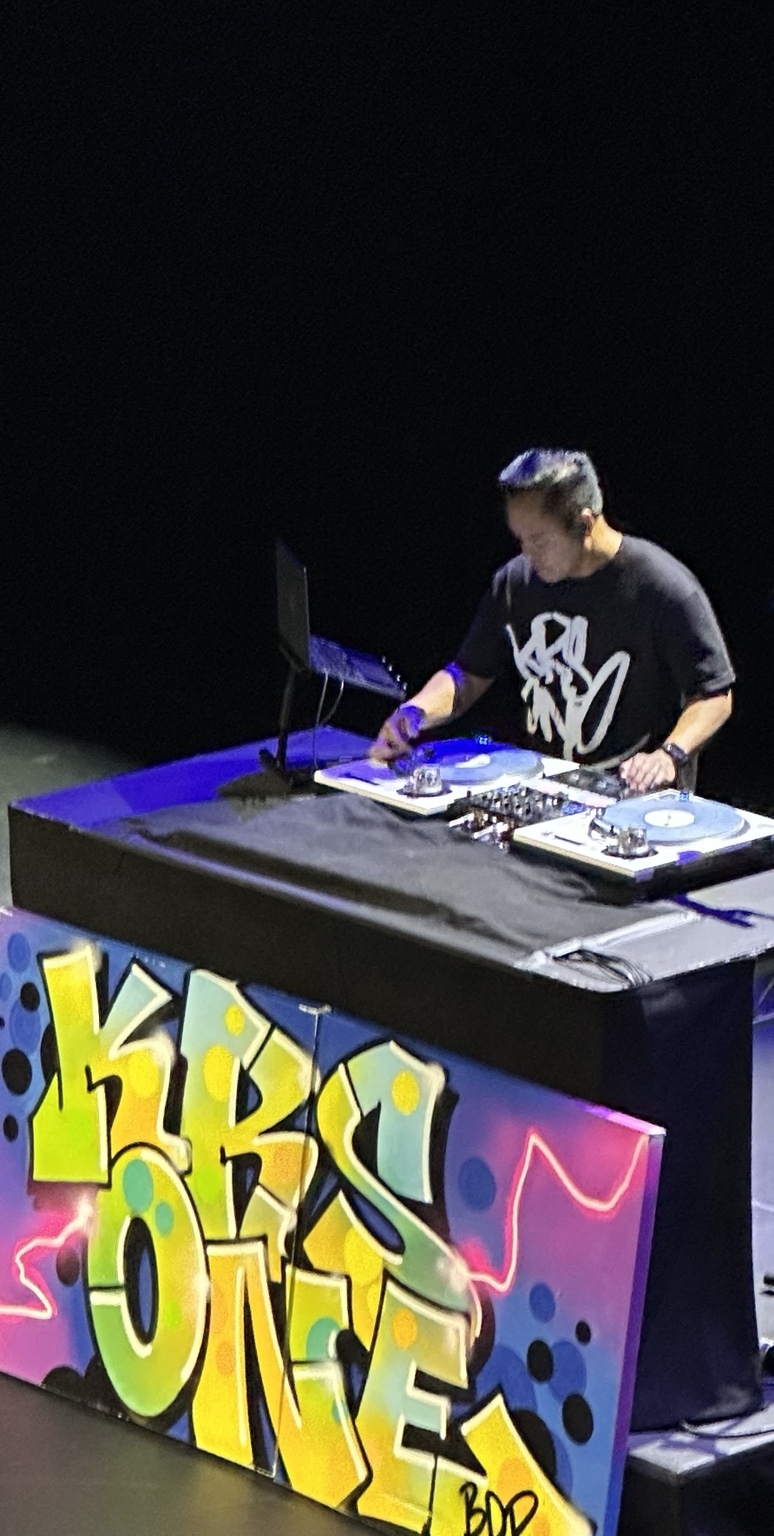
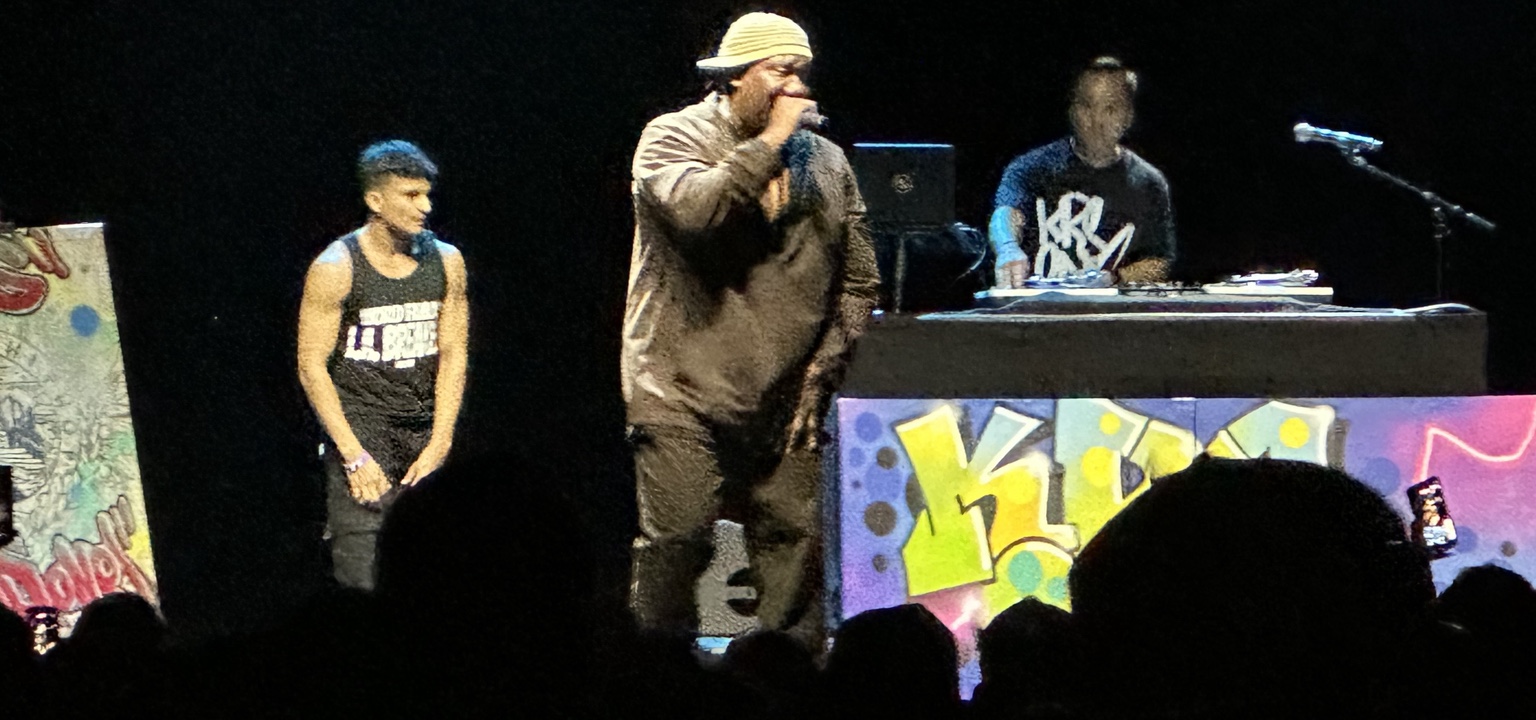
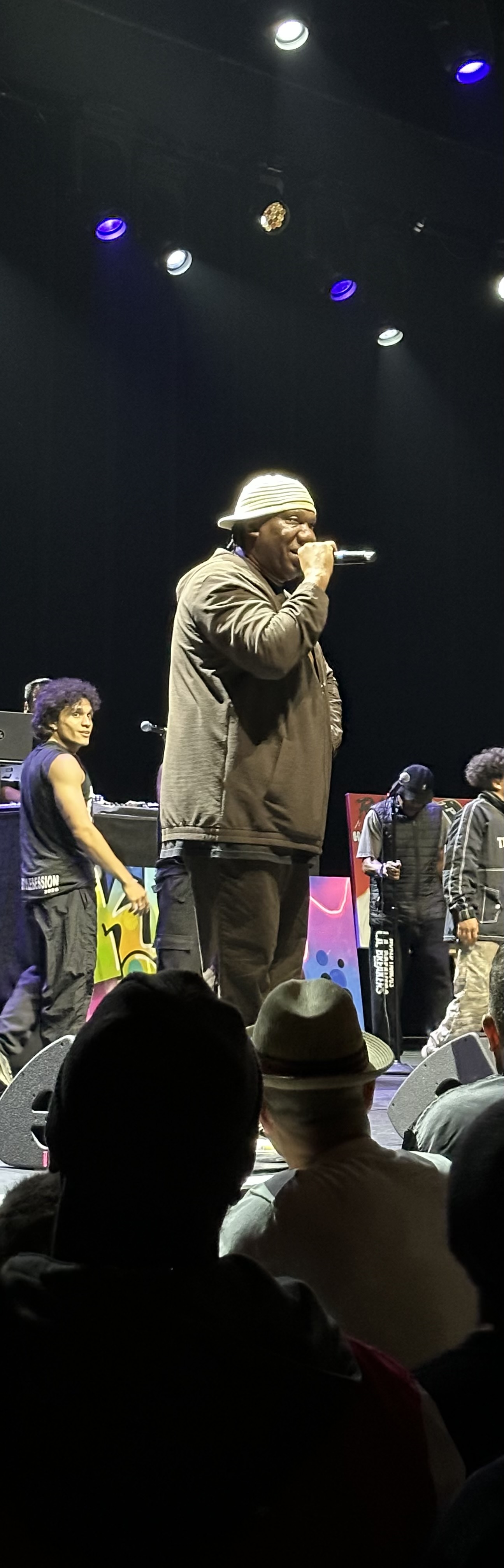
All four foundational elements of hip-hop were represented onstage.
A DJ commanded the turntables. B-boys brought the breakbeats to life through movement. A completed graffiti piece bearing the name KRS-One provided a visual tribute to the art of writing. And at the center stood the Blastmaster himself, representing MCing with the authority of someone who has spent decades defending hip-hop’s cultural identity.
It was hip-hop history brought to life.
According to a Coachella Scene concertgoer in attendance, the crowd numbered fewer than a thousand, but the energy felt twice as large.
KRS-One performed his classics and additional material, taking the audience through his musical legacy while launching into expansive, sometimes metaphysical discussions that demonstrated why his nickname has endured.
One moment, the crowd was immersed in the music. The next, The Teacha was taking them somewhere deeper, exploring ideas well beyond the boundaries of a conventional rap performance.
And the audience was right there with him.
For KRS-One, the microphone has always been more than an instrument of entertainment. It’s a platform for education, consciousness and cultural preservation.
The evening wasn’t all philosophy and hard-hitting beats, either.
Toward the end of the performance, KRS-One began tossing signed tennis balls into the audience, sending fans home with unexpected souvenirs and one final gesture of appreciation.
There was something beautifully unpretentious about it.
No elaborate corporate spectacle. No manufactured VIP moment. Just an artist connecting with the people who came to celebrate the music.
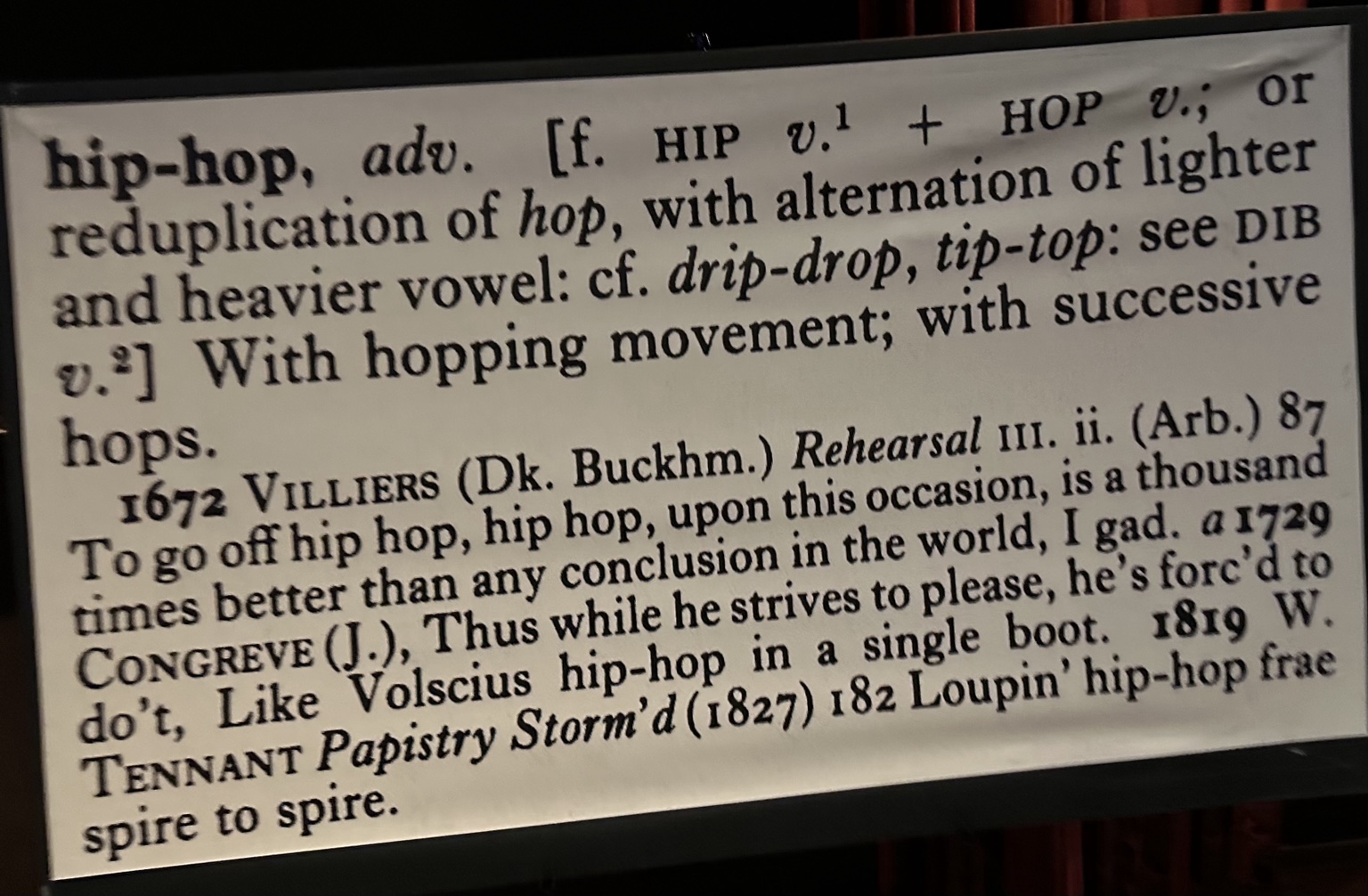
Educational displays at the concert further explored hip-hop’s history, philosophy and cultural traditions, reinforcing the message that this movement has always been bigger than the recording industry.
For an audience gathered on the first night of Hip-Hop History Month, the symbolism couldn’t have been more appropriate.
The DJ. The MC. The breakers. The graffiti.
Four elements. One culture.
And more than fifty years after the first Bronx block parties, still bringing people together.
When Hip-Hop Found Its Political Voice
Hip-hop has never been politically or socially uniform. Its history contains celebration, confrontation, commercial ambition, community organizing and plenty of contradictions.
But some of its most enduring recordings challenged listeners to confront uncomfortable realities.
Grandmaster Flash and the Furious Five’s 1982 recording “The Message” helped establish the commercial and artistic possibilities of socially conscious rap.
Public Enemy later brought militant political imagery, dense production and uncompromising commentary into mainstream music culture.
KRS-One helped turn hip-hop toward organized anti-violence advocacy through the Stop the Violence Movement, whose 1989 single “Self Destruction” brought together prominent artists around a message of community responsibility.
Meanwhile, artists across the country were developing distinct regional identities.
The West Coast contributed electro, gangsta rap, G-funk and politically charged lyricism. Southern hip-hop developed its own rhythmic and cultural traditions. New York continued producing new generations of MCs, DJs and innovators.
Women including MC Sha-Rock, Roxanne Shanté, Queen Latifah, Salt-N-Pepa and countless others challenged the idea that hip-hop belonged exclusively to men.
The culture was never one sound, one city or one perspective.
Its strength came from the tension between all of them.
From the Bronx to Everywhere
Today, hip-hop’s influence stretches across continents and musical boundaries.
Its fingerprints are all over electronic music, pop, contemporary R&B, experimental bass, fashion, visual art and digital culture.
Sampling helped change how musicians understood composition. Turntablism challenged conventional definitions of instrumental performance. Breakbeats became fundamental building blocks for genres including jungle and drum & bass.
And graffiti’s visual vocabulary became an international language, recognizable from New York subway history to contemporary street-art movements.
But global influence brings complicated questions.
What happens when a culture born from community expression becomes a marketing strategy?
Who benefits when underground creativity becomes commercially valuable?
And how do we preserve the contributions of pioneers while celebrating artists who continue pushing the boundaries?
Those questions deserve more than a month of nostalgic playlists.
They deserve serious attention.
The Desert Has a Scene, Too
Here in Southern California, hip-hop’s legacy isn’t confined to Los Angeles.
Its influence travels through independent music communities, DJ culture, street art, beatmaking and the creative spaces where artists build something without waiting for an invitation.
The Coachella Valley has its own place in that wider cultural conversation.
And while enormous festivals bring international artists to the desert, the most interesting stories aren’t always happening beneath the biggest stages.
Sometimes they’re being created by a local producer experimenting with samples, an independent MC developing a voice or a graffiti artist building a visual identity one wall at a time.
Those are the people Coachella Scene wants to find.
Not because they’re already famous.
Because they’re making something worth hearing.
Hip-Hop Is Something We Live
Hip-hop has survived commercialization, censorship battles, generational arguments, technological revolutions and more predictions of its demise than anyone should bother counting.
It has changed dramatically since those early Bronx parties.
It should.
Living cultures evolve.
But underneath the records, the fashion, the business and the mythology, something fundamental remains.
The belief that creativity can transform ordinary spaces into places of extraordinary possibility.
That a microphone can give someone a voice.
That a turntable can become an instrument.
That a wall can become a canvas.
That a neighborhood party can become a movement.
And that a culture built by young people who were too often overlooked can change the entire world.
This November, celebrate the records. Celebrate the legends. Celebrate the dancers, the writers, the producers and the pioneers.
But don’t forget the communities that made it possible.
Hip-hop didn’t wait for permission to exist.
And it sure as hell doesn’t need permission to keep evolving.
The Desert Has a Scene.
Words by Roxy Riot. Concert photography by SLDG / Coachella Scene. The Novo, Los Angeles — November 1, 2026.

Leave a Reply